
TEEN MULTI
FOR HIM
30 Chewable Tablets
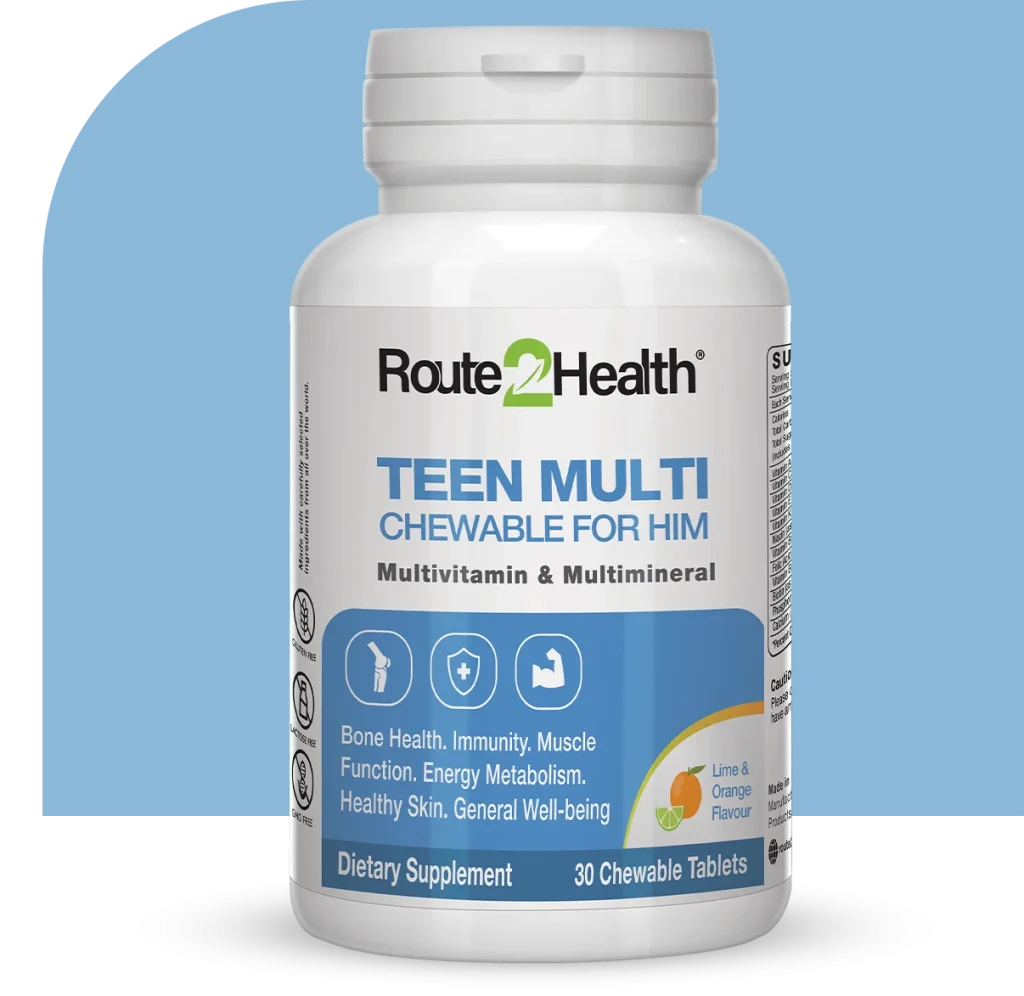
PRODUCT
BENEFITS

Increases Energy

Promotes Optimal Growth

Improves General Well-being
Teens Multi For Him offers a comprehensive blend of essential vitamins and minerals, promoting optimal growth, increased energy, and improved general well-being for teenagers.
“UNLEASHING THE
POWER WITHIN”
Teens Multi For Him combines essential nutrients, including Vitamin A for vision and immune support, Vitamin C for antioxidants and immune health, and Vitamin D3 for bone health. The formulation includes Vitamin E for cell protection, Vitamin K1 for blood clotting, and B vitamins (Niacinamide and Pyridoxine HCI) for energy metabolism and cognitive function. Folic acid and Vitamin B12 contribute to DNA synthesis and red blood cell formation, while biotin supports healthy skin, hair, and nails. Phosphorus and calcium enhance bone health, ensuring a holistic approach to teens’ well-being. This carefully curated blend is designed to meet the specific nutritional requirements of growing male teens.
Our lime and orange-flavoured tablets turn nutrition into a mouth-watering experience, leaving you with no reason not to give your young boys the necessary nutrients.
| Each Tablet Contains | |
| Vitamin A (as Retinyl Acetate & Beta-Carotene) | 750 mcg |
| Vitamin C (as Ascorbic Acid) | 75 mg |
| Vitamin D3 (as Cholecalciferol) | 600 IU |
| Vitamin E (as dl-Alpha Tocopheryl Acetate) | 13.5 mg |
| Vitamin B12 (as Cyanocobalamin) | 1.4 mcg |
| Vitamin K1 (as Phytomenadione) | 75 mcg |
| Niacin (as Niacinamide) | 16 mg |
| Vitamin B6 (as Pyridoxine HCI) | 1.3 mg |
| Folic Acid | 200 mcg |
| Biotin (as d-Biotin) | 30 mcg |
| Phosporous (as Calcium Phosphate) | 40 mg |
| Calcium (as Calcium Carbonate) | 100 mg |
Dosage
One chewable tablet daily preferably with a meal, or as advised by the doctor.
Storage
Do not store above 30°C. Keep in a dry place and protect from light. Close the cap tightly after use. Keep out of reach of children.
Caution
Please consult your doctor if you are taking any regular medication, have any medical conditions or experiencing adverse reactions.
FUELING THE TEEN TITAN
Optimal Growth
Teens Multi For Him facilitates optimal growth by including crucial vitamins and minerals. Vitamin B12, folic acid, and biotin contribute to DNA synthesis and red blood cell formation, supporting overall cellular development. Vitamin D3 enhances calcium absorption, which is essential for proper bone growth and mineralization during adolescence. This comprehensive blend ensures teens receive the necessary nutrients to foster physical and mental development.
Bone
Strength
This supplement fortifies bone strength with a strategic combination of calcium and phosphorus. Calcium, sourced from calcium carbonate, provides the essential building blocks for strong and healthy bones. Phosphorus, in the form of calcium phosphate, complements calcium in bone mineralization. Together, they contribute to skeletal integrity, ensuring that growing teens develop robust bone structures.
Energy Increase
Teens Multi For Him promotes increased energy levels through the synergistic action of its key ingredients. Vitamin B complexes, including niacinamide and B6, play a pivotal role in energy metabolism, converting food into usable energy. Additionally, vitamin C aids in reducing fatigue and supporting overall vitality. The formulation ensures that teens have the nutrients to sustain their active lifestyle.
PRODUCT
FAQs
What is the minimum age for multivitamins?
There is no designated minimum age for taking multivitamins. While it’s recommended to consult with a healthcare professional, multivitamins are generally considered safe for teenagers, starting around 12-13 years old.
Is taking a multivitamin daily for teen boys good?
Yes, taking a multivitamin daily can help ensure a consistent intake of essential nutrients, supporting overall health and well-being in teen boys.
Are multivitamins good for 16-year-old teen boys?
Yes, multivitamins can be beneficial for 16-year-old teen boys, providing essential nutrients that may be lacking in their diet, supporting overall health, and addressing the specific needs of adolescents.
What vitamins should a 14-year-old teen boy take?
A 14-year-old teen boy may benefit from vitamins like A, C, D3, E, and B-complex vitamins (including B6 and B12) to support growth, immune function, and energy metabolism.
Can a 17-year-old teen boy take multivitamins?
Certainly, a 17-year-old teen boy can take multivitamins to ensure he receives adequate nutrients crucial for his physical and mental development during adolescence.
Should an 18-year-old teen boy take a multivitamin?
Yes, an 18-year-old teen boy can continue to benefit from a multivitamin, especially if dietary intake may not provide sufficient levels of essential vitamins and minerals.
Should I start taking vitamins at age 18? Are multivitamins safe for teen boys?
Starting vitamins at 18 can be beneficial, and multivitamins are generally safe for teen boys, providing a convenient way to fill nutritional gaps.
Do multivitamins have side effects on male teens?
When taken as directed, multivitamins typically have minimal side effects; however, it’s advisable to follow recommended dosages to prevent any adverse reactions.
Do multivitamins cause weight gain in teen boys?
Multivitamins, when taken in moderation, do not cause weight gain.
Are multivitamins good for male teens' skin?
Certain vitamins, like A and E, in supplements, can contribute to healthy skin.
Why should this product be considered for teenage boys?
This product is specifically formulated to meet the nutritional needs of teenage boys, promoting optimal growth, bone strength, and increased energy, ensuring they thrive during a critical phase of development.
How do vitamins B6, B12, biotin, and niacin help teenage boys?
Vitamin B6, B12, Biotin, and Niacin support energy metabolism, cognitive function, and overall well-being in teenage boys, ensuring they have the stamina and focus needed for their active lifestyles.
What are the food sources of Vitamin A, Vitamin C, Vitamin D3, Vitamin E, Vitamin K, Niacin, Vitamin B6, Folic Acid, Vitamin B12, Phosphorus, and Calcium?
- Vitamin A: carrots, sweet potatoes, spinach, mangoes, and eggs
- Vitamin C: citrus fruits (oranges, lemons, grapefruits), bell peppers, strawberries, kiwi, broccoli
- Vitamin D3: fatty fish (salmon, mackerel, tuna), fortified dairy products (milk, yoghurt), egg yolks, beef liver, cheese
- Vitamin E: nuts and seeds (almonds, sunflower seeds), spinach, broccoli, vegetable oils (sunflower, safflower), avocado
- Vitamin K: leafy greens (kale, spinach, collard greens), broccoli, brussels sprouts, green beans, prunes
- Niacin (Vitamin B3): meat (chicken, turkey, pork), fish (tuna, salmon), peanuts, mushrooms, avocado
- Vitamin B6: chicken, turkey, potatoes, bananas, and fortified cereals
- Folic Acid: leafy greens (spinach, kale), lentils, avocado, oranges, and beans
- Vitamin B12: meat (beef, pork, lamb), fish (salmon, trout), dairy products (milk, cheese), eggs, and fortified cereals
- Phosphorus: dairy products (milk, yoghurt, cheese), meat (beef, pork, chicken), fish (salmon, tuna), nuts and seeds, whole grains
What happens if there is a deficiency of vitamin B12?
Deficiency in Vitamin B12 can lead to fatigue, weakness, and potential neurological issues, impacting mood and cognitive function.
What happens if there is a calcium and vitamin D deficiency?
Calcium and vitamin D deficiency can result in weakened bones, an increased risk of fractures, and impaired overall bone health. Regular intake is crucial for skeletal strength and development.